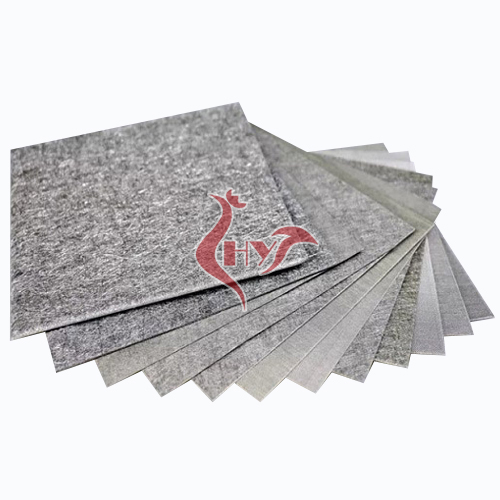
Our Platinised Titanium Felt represents a breakthrough in three-dimensional electrode design, offering an exceptionally high surface-to-volume ratio that dramatically enhances electrochemical reaction rates. This innovative material combines titanium's structural integrity with platinum's superior catalytic properties in a unique porous matrix.
Transformative Applications:
Advanced Electrolysis Systems: Water splitting, chlor-alkali processes
Fuel Cell Technology: PEM fuel cells, direct methanol fuel cells
Organic Electro-synthesis: Pharmaceutical intermediates, fine chemicals
Environmental Remediation: Wastewater treatment, pollutant degradation
Energy Storage: Flow batteries, advanced capacitor systems
Unmatched Advantages of 3D Felt Architecture
Exceptional Surface Area
Porous felt structure provides up to 50x more active surface area than conventional 2D electrodes, dramatically increasing reaction efficiency.
Superior Mass Transfer
Three-dimensional open pore structure enables enhanced reactant access and product removal, optimizing process kinetics.
Customizable Porosity
Available in multiple density grades (10-30% of solid density) to match specific flow and reaction requirements.
Mechanical Flexibility
Compressible and formable nature allows perfect conformability to complex reactor geometries and sealing requirements.
Integrated Current Collection
Built-in titanium support mesh or foil provides uniform current distribution throughout the felt matrix.
Technical Specifications
Parameter | Specification |
Base Material | Titanium Felt (Grade 1) |
Platinum Loading | 5-50 g/m² (variable coverage) |
Standard Thickness | 0.5mm - 10mm |
Standard Density | 15%, 20%, 25% of solid titanium |
Pore Size Distribution | 5-100μm (customizable) |
Electrical Conductivity | 200-800 S/m (dependent on compression) |
Advanced Configurations:
Gradient density designs
Multi-layer composite structures
Integrated flow field patterns
Custom-shaped pre-forms
Performance-Enhancing Characteristics
Enhanced Reaction Kinetics
Three-dimensional electrode structure significantly increases active sites, reducing overpotential and improving energy efficiency.
Superior Gas Management
Open porous structure facilitates efficient gas bubble release, critical for electrolysis and fuel cell applications.
Thermal Management
High porosity enables effective heat dissipation in exothermic electrochemical reactions.
Long-term Stability
Robust platinum-titanium bond maintains performance under continuous operation and thermal cycling.
Application-Specific Solutions
Water Electrolysis
Maximizes hydrogen production efficiency through enhanced bubble release and optimal catalyst utilization.
Flow Battery Systems
Provides high surface area for efficient charge transfer in vanadium and other flow battery technologies.
Organic Synthesis
Enables high conversion rates and selectivity in pharmaceutical and specialty chemical manufacturing.
Environmental Applications
Superior performance in electrochemical oxidation of persistent organic pollutants and water disinfection.
Custom Engineering Services
Material Tailoring:
Custom porosity and pore size engineering
Gradient density profiles for optimized flow distribution
Platinum loading optimization for specific reactions
Composite structures with integrated current collectors
Application Development:
Reactor design consultation
Process optimization studies
Performance validation testing
Scale-up support from laboratory to production
Frequently Asked Questions
Q: How does felt compare to mesh or plate anodes in electrochemical applications?
A: Felt provides significantly higher surface area (typically 10-50x) and superior three-dimensional reaction zones, making it ideal for processes limited by reaction kinetics.
Q: Can the felt be compressed to fit specific reactor dimensions?
A: Yes, our titanium felt can be compressed up to 50% of its original thickness while maintaining structural integrity and performance.
Q: What is the typical platinum utilization efficiency compared to coated electrodes?
A: The porous structure typically achieves 80-95% platinum utilization versus 40-60% for conventional coated electrodes.
Q: Do you offer felt with patterned platinum distribution?
A: We can create gradient platinum loading and patterned deposition to optimize performance for specific flow conditions and reaction requirements.
Ready to Revolutionize Your Electrochemical Process?
Contact our advanced materials team to discover how our Platinised Titanium Felt can transform your application performance.
Advanced Materials Support: +86 13891704215
Application Development: nwhengyimetal@gmail.com
Innovation Leadership
Quality Certifications:
ISO 9001:2015 Quality Management
Material Traceability and Lot Control
Performance Validation Testing
Custom Formulation Documentation
Research Partnerships:
Collaborating with leading universities and research institutions to advance porous electrode technology for next-generation electrochemical applications.