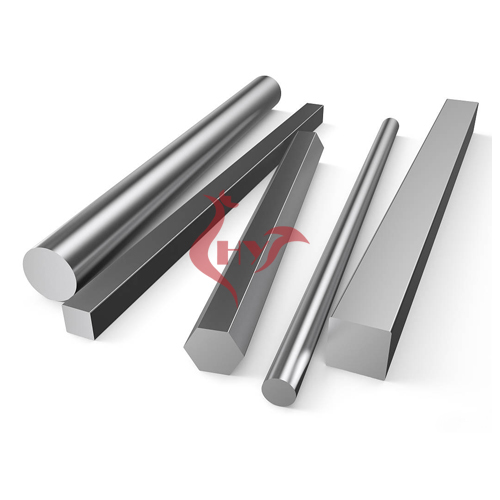
Titanium Bar: The Solid Core of Exceptional Performance, Driving the Future of Industrial Innovation
In the industrial world that pursues ultimate performance, every great design requires a solid and reliable core. Whether it's a high-speed rotating aircraft engine, an artificial joint embedded deep within the human body, or mountaineering equipment that conquers peaks, their outstanding performance relies on a common foundation—the titanium bar.
Why is the Titanium Bar the Ideal Choice for Your Critical Components?
The value of titanium bars stems from the innate advantages of titanium metal and is perfectly released through precision processes:
Perfect Balance of Strength and Lightness: Titanium bars are comparable in strength to high-strength alloy steels, yet about 40% lighter. This exceptional strength-to-weight ratio means significant weight reduction can be achieved while ensuring structural integrity, improving equipment energy efficiency and dynamic performance.
Unparalleled Corrosion Resistance and Service Life: Facing harsh media such as acids, alkalis, and chlorides, titanium bars form a dense protective film, offering "indestructible" protection. This directly translates into equipment service life extended by several times and significantly reduced maintenance costs, proving invaluable especially in chemical and marine applications.
Excellent Biocompatibility: As a "close partner" to the human body, titanium bars are non-toxic, harmless, and non-allergenic, making them the ideal choice for manufacturing medical devices like artificial joints, bone plates, and dental implants, safeguarding human health.
Outstanding Fatigue Resistance and Heat Resistance: Under repeated loading and in high/low-temperature environments, titanium bars maintain stable mechanical properties, ensuring long-term reliability and safety in extreme operating conditions such as aerospace and racing.
Titanium Bar Common Specifications Model List
Item Category | Specifications & Models | Guidance & Applications |
Common Materials | • Pure Titanium: TA1, TA2, GR1, GR2
• Titanium Alloy: TC4 (GR5, Ti-6Al-4V), TC11, TA7 | TA1/TA2: Excellent corrosion resistance and formability, suitable for chemical, marine, and medical fields.
TC4: The most commonly used high-strength titanium alloy with excellent comprehensive performance, used in aerospace, sports equipment. |
Manufacturing Process | • Hot Forged/Rolled Bar
• Cold Drawn/Precision Ground Bar | Hot Forged/Rolled Bar: Wide diameter range, good isotropic mechanical properties, used for general structural components.
Cold Drawn/Precision Ground Bar: High dimensional accuracy, good surface finish, used for precision shaft parts. |
Bar Diameter | Range: Φ5mm ~ Φ50mm
Breakdown:
• Small Diameter: Φ5mm ~ Φ20mm
• Medium Diameter: Φ21mm ~ Φ50mm | Large diameters (>50mm) customization supported. Small diameter bars often used for fasteners, medical guide wires; large diameter bars for large forging blanks. |
Supply Condition | • Annealed (M)
• Hot Worked (R)
• Cold Worked/Solution Treated and Aged (STA, Y) | Annealed: Good plasticity, easy for machining.
Solution Treated and Aged (for TC4, etc.): Achieves the highest strength, used for critical load-bearing components. |
Length | Conventional: 3000mm ~ 6000mm
(Can be customized to fixed or multiple lengths as required) | Standard lengths facilitate transportation and storage; fixed-length cutting reduces material waste and improves processing efficiency. |
Shape | • Round Bar
• Square Bar
• Hexagonal Bar | Round Bar is the most common, used for turning shaft parts.
Square/Hexagonal Bars are suitable for specific fixtures and structures, such as wrenches, special connectors. |
Surface Treatment | • Turned
• Polished/Ground
• Pickled
• As-Forged/Rolled (Black) | Turned/Polished: Smooth surface, accurate dimensions, for precision parts.
Black Surface: Retains the hot-worked condition, lower cost, suitable for subsequent forging or parts with large machining allowances. |
Execution Standards | ASTM B348, GB/T 2965 | Provides complete material certification and traceability. |
Typical Applications | • Aerospace: Engine connecting rods, landing gear components, fastening bolts
• Chemical/Marine: Pump shafts, valve stems, agitator shafts
• Medical Health: Artificial joint femoral stems, bone screws, surgical instruments
• Sports & Leisure: Golf club heads, bicycle cranks, climbing carabiners
• Automotive Industry: Racing connecting rods, valves | Titanium bar is the core foundational material for achieving lightweight, high-strength, and long-life design. |
Comprehensive Product Matrix:
Material Selection: From pure titanium (TA1, TA2) with excellent corrosion resistance to titanium alloys (TC4, TC11) with superior strength, meeting diverse needs from the silent human body to powerful engines.
Form and Precision: Providing hot-rolled bars, forged bars, cold-drawn/precision ground bars, ranging from economical black bars to precision materials comparable to mirrors, covering all stages of processing needs.
Empowering Industries: Witness the Power of Titanium Bar as the "Backbone of Industry"
Aerospace: As the core material for engine connecting rods and landing gear struts, titanium bars carry immense forces while saving every gram of weight, ensuring flight safety.
High-End Medical: Precisely machined titanium bars serve as the base material for artificial joint femoral stems and spinal connecting rods, supporting the weight and dignity of life with their biocompatibility and high strength.
Chemical and Marine: As pump shafts, valve stems, and agitator shafts, titanium bars operate silently for decades in highly corrosive environments, becoming the "bedrock" for continuous production in process industries.
Sports and Leisure: Inside top-tier bicycle cranks and golf club heads, titanium bars contribute to the champion equipment's exceptional performance and distinctive taste with their light weight, high strength, and unique metallic texture.
As the "powerhouse" of the titanium material family, titanium bars, with their unparalleled comprehensive performance, are quietly becoming an indispensable cornerstone of high-end equipment manufacturing.